
Adformatie: The Olympic Games prove it: sport beats traditional marketing
“Sport has the power to change the world.” The words of Nelson Mandela are often used to highlight the societal value of sport. That same power that makes sport socially relevant also makes it commercially exceptional. At a time when commercial messaging is under pressure and brands are finding it increasingly difficult to stand out, sport offers something almost no other marketing tool can: real emotion, shared experience, and credible brand meaning. And we see this once again at the Olympic Winter Games.
Sport creates real emotion
One of the biggest challenges marketing faces today is that consumers are no longer waiting for commercial brand messages. Most advertising is experienced as noise. Sport breaks that pattern. Not because brands shout louder in sport, but because they become part of something people already intrinsically care about. Fans watch the Winter Games for passion, tension, and engagement.
When a brand credibly connects to that passion, it automatically benefits from the emotional value sport generates. That makes sports marketing fundamentally different from advertising. Brands don’t buy attention; they earn relevance within a context that already holds meaning for the audience. The Procter & Gamble ‘Thank You Mom’ case is a powerful example: not a product story, but emotional positioning around the mothers of athletes.
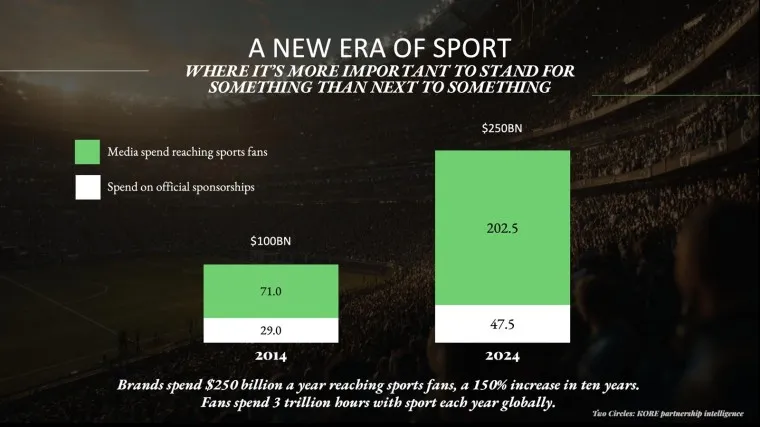
Globally, brands now invest around $250 billion in media to reach sports fans; a 150% increase over the past decade. That growth signals one thing: in a world full of advertising noise, sport remains one of the last domains where brands don’t have to force attention, but can earn meaning.
Sport is the last domain of unpredictability
Almost every entertainment industry is moving toward predictability. Films, series, and music are increasingly built on proven formulas: sequels, remakes, and franchise extensions. Sport works the exact opposite way. Even if competition structures are familiar, the outcome is always uncertain. These Winter Games once again deliver surprises (such as the victory of Mikhail Shaidorov over Ilia Malinin), spectacle (Jens van ’t Wout & Xandra Velzeboer), new heroes (Franjo von Allmen, Francesca Lollobrigida, Lucas Pinheiro Braathen) and historic moments such as the crash of Lindsey Vonn.
It is precisely this unpredictability that creates genuine tension and engagement. For brands, this means connecting to stories that unfold live and feel authentic. At a time when consumers are increasingly resistant to staged and AI-driven marketing, sport offers a rare form of credible storytelling.
Unpredictability also enables real-time marketing. As a brand, you are not just a sponsor but also part of the editorial layer. A powerful example around the Winter Games is FIGS, which, together with ski icon Lindsey Vonn, went beyond logo exposure. With the campaign ‘it takes heart to build bodies that break records,’ the brand didn’t center Vonn herself, but her medical team. Not commercial visibility, but a human story that adds real emotion and therefore sticks with fans.
Sport dominates live attention
Media consumption continues to shift toward on-demand and personalized content. At the same time, the value of live moments is increasing. Live content commands attention and drives social interaction. Sport is unique in this.
The Olympic Winter Games are among the most-watched live broadcasts worldwide. In the Netherlands alone, more than 4 million people watched the victories of Jutta Leerdam and Femke Kok; numbers comparable to the national football team during major tournaments. Live sport is the only genre with growing linear viewing time. It is not watched on delay and is widely shared across social media. For brands, this means being present at moments when consumers are truly paying attention and emotionally engaged. This not only increases visibility, but more importantly brand recall and brand preference.
Sport builds collective experience
Sport is inherently social. We experience the Winter Games together at home or around the coffee machine at work. When brands become part of this social context, they benefit from something that is difficult to create through traditional campaigns: long-term emotional brand relationships. Fans perceive sponsors as partners in their passion, provided the collaboration is credible. That credibility arises when brand and sport align seamlessly in substance and when the brand demonstrably adds value to the fan experience.
Sport offers content instead of just media
Digital channels demand a constant flow of relevant stories, formats, and interaction. Sport offers brands access to an almost inexhaustible source of content: performance, setbacks, perseverance, and team spirit. These are human themes that align seamlessly with brand positioning and storytelling. Moreover, sports content continuously evolves, allowing brands to remain structurally relevant rather than dependent on one-off campaigns. Innovations such as drone footage during the Winter Games enhance the fan experience: viewers experience speed, risk, and elevation from perspectives that traditional cameras cannot provide. The technology deepens emotion and, with it, the brand context.
Sport is not a media channel, but culture
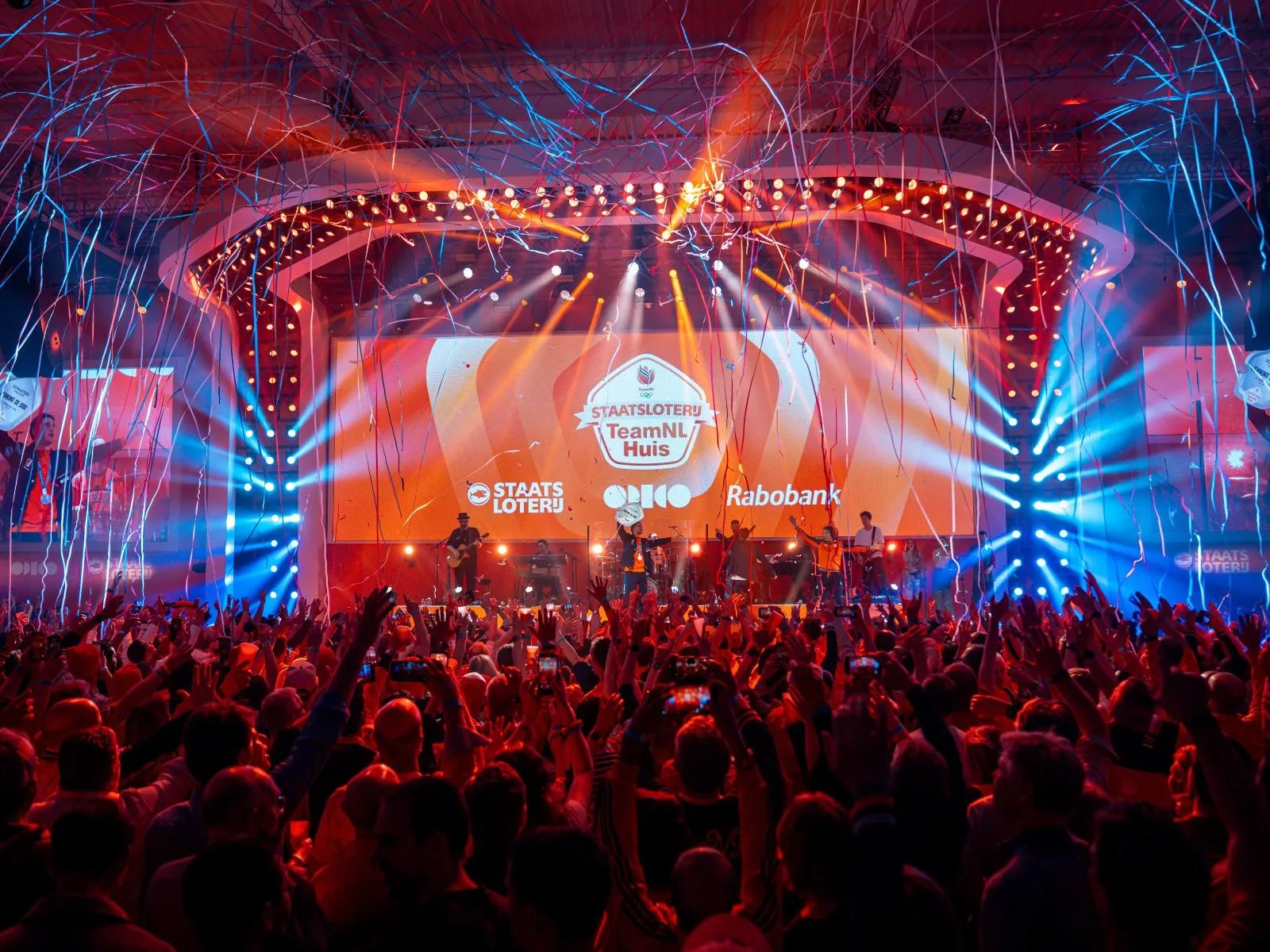
The biggest mistake brands still make is treating sport as just another media channel as a place to buy reach. But sport is not advertising space. It is a cultural ecosystem where emotion, identity, and community come together. You don’t buy attention there; you have to earn meaning. Brands that truly leverage sport understand that difference. They invest not only in visibility, but in participation. In presence that adds to the fan experience. You see this, for example, in the Staatsloterij TeamNL Huis, a place where national pride becomes tangible, where athletes, fans, and partners come together. Brands like Staatsloterij, Rabobank and Odido are not just visible there; they are part of the fan experience. And that’s how they build relationships instead of campaigns.
Conclusion
In a marketing world full of noise, algorithms, and fragmented attention, sport remains one of the few places where emotion, culture, and collective energy come together. That is exactly where real brand value is created. Sport is not an addition to your marketing mix. Used well, it is the foundation of your brand strategy.